This post may contain affiliate links. As an Amazon Associate, I earn from qualifying purchases. If you click and buy, we may earn a small commission at no extra cost to you. Learn more.
Quick Answer
An air fryer for beginners works like a mini convection oven — hot air circulates around food to make it crispy without deep frying. Start with simple foods like frozen fries or chicken wings at 375°F (190°C), shake the basket halfway through, and you’ll get restaurant-quality results in minutes.
Getting your first air fryer is like unlocking a kitchen superpower. You’ll wonder how you ever lived without it.
But if you’re staring at your new appliance thinking “now what?” — you’re not alone. Most beginners feel a little intimidated at first. The good news? Air fryers are easier to use than a toaster once you understand the basics.
This guide walks you through everything you need to know — no jargon, no confusing techniques, just practical steps that actually work. By the end, you’ll feel confident enough to cook your first meal tonight.
Before You Start — Quick Checklist
- ✓Read the manual — seriously, it takes 5 minutes and tells you the exact basket capacity
- ✓Wash the basket and tray with warm soapy water before first use
- ✓Place your air fryer on a flat, heat-safe surface with 5 inches of clearance on all sides
- ✓Run it empty at 400°F (200°C) for 5 minutes to burn off factory coating smells
- ✓Keep a spray bottle of cooking oil nearby — you’ll use it constantly
In This Guide
How Air Fryers Actually Work
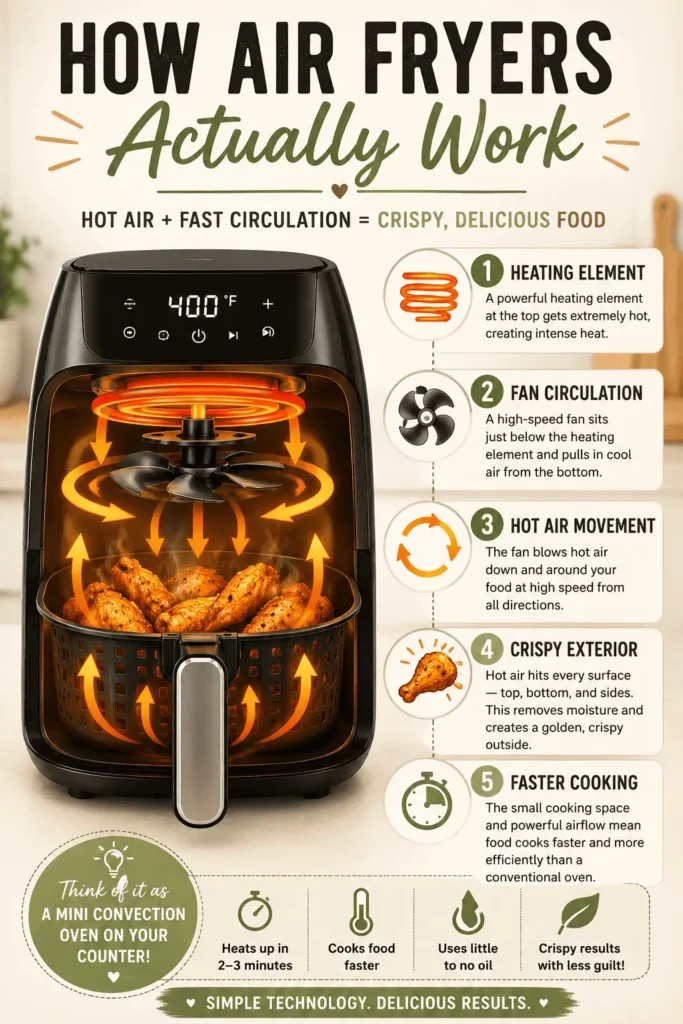
Think of your air fryer as a tiny, powerful convection oven that sits on your counter. That’s really all it is.
A heating element at the top gets extremely hot. A fan right below it blows that hot air down and around your food at high speed. The basket has holes in it, so hot air hits every surface — top, bottom, sides.
This rapid air circulation is what makes food crispy. You’re not actually “frying” anything. You’re baking with turbocharged airflow, which creates a golden, crunchy exterior without submerging food in oil.
Why It’s Different From Your Oven
Your regular oven is huge. It takes 10 minutes just to preheat, and air doesn’t circulate as aggressively.
An air fryer heats up in 2-3 minutes. The small space concentrates heat. The powerful fan creates that signature crispiness. That’s why a 20-minute oven recipe takes 12 minutes in an air fryer.
What Temperature Should I Use?
Most air fryer recipes fall between 350°F and 400°F (175°C to 200°C). That’s your sweet spot.
Here’s the simple rule: if you’re converting an oven recipe, reduce the temperature by 25°F (15°C) and cut the time by about 20%. Air fryers cook faster and hotter because of that concentrated airflow.
For beginners, I recommend starting everything at 375°F (190°C). It’s the Goldilocks temperature — not too hot, not too cool. Once you get comfortable, you can adjust up or down based on what you’re cooking.
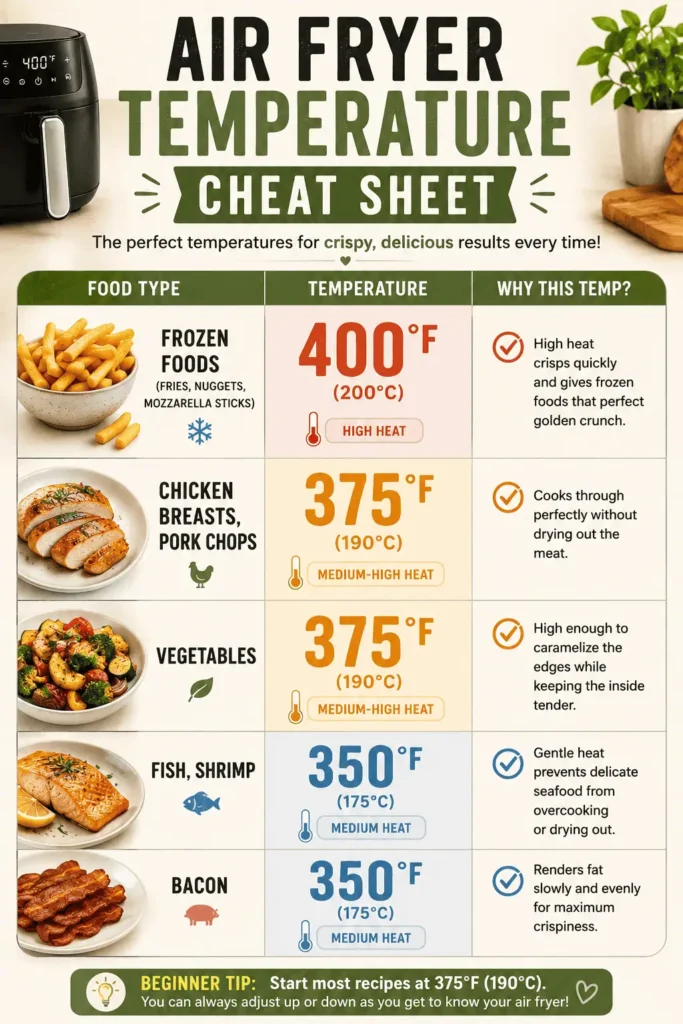
Temperature Guide for Common Foods
| Food Type | Temperature | Why |
|---|---|---|
| Frozen foods (fries, nuggets) | 400°F (200°C) | High heat crisps quickly |
| Chicken breasts, pork chops | 375°F (190°C) | Cooks through without drying out |
| Vegetables | 375°F (190°C) | Caramelizes edges, stays tender inside |
| Fish, shrimp | 350°F (175°C) | Gentle heat prevents overcooking |
| Bacon | 350°F (175°C) | Renders fat slowly for even crispness |
How Long Does Food Take to Cook?
This is where beginners get nervous. You’ll see recipes that say “10-12 minutes” and wonder — which is it?
Here’s the truth: air fryer models vary slightly in power. A 1500-watt model cooks faster than a 1200-watt one. Your first few cooks are about learning your specific appliance.
Always check food 2 minutes before the recipe says it’s done. Use a meat thermometer for chicken (165°F / 74°C internal temp) or pork (145°F / 63°C). For everything else, peek in and look for golden-brown color.
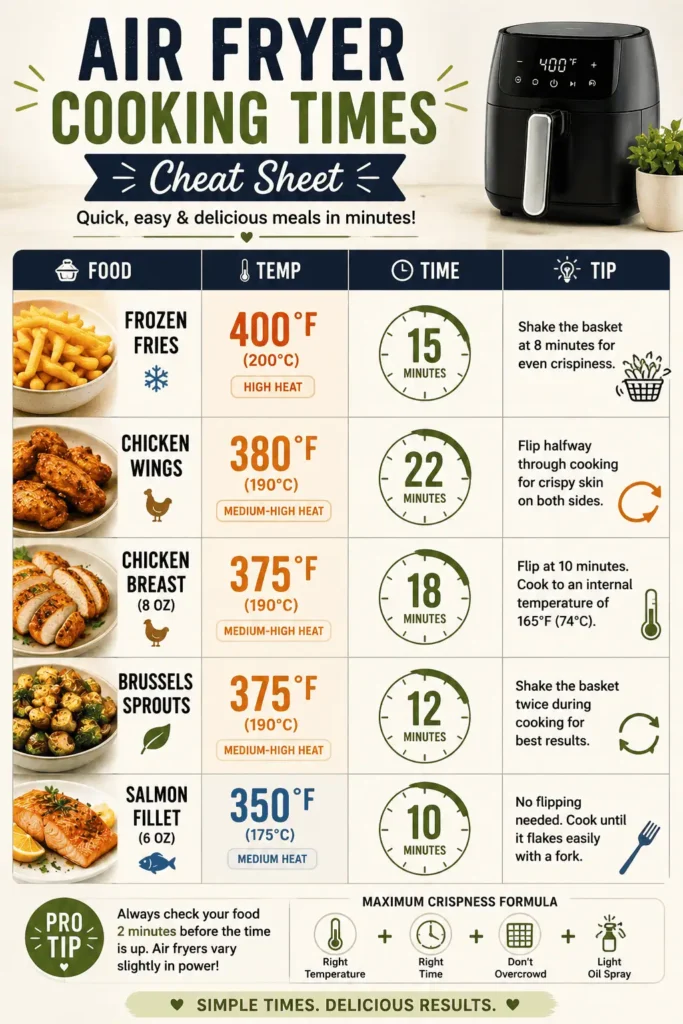
Beginner-Friendly Cooking Times
| Food | Temp | Time | Tip |
|---|---|---|---|
| Frozen fries | 400°F | 15 minutes | Shake at 8 minutes |
| Chicken wings | 380°F | 22 minutes | Flip halfway through |
| Chicken breast (8 oz) | 375°F | 18 minutes | Flip at 10 minutes |
| Brussels sprouts | 375°F | 12 minutes | Shake twice during cooking |
| Salmon fillet (6 oz) | 350°F | 10 minutes | No flipping needed |
The Golden Rule About Basket Space
This is the number one mistake beginners make: cramming too much food into the basket.
Air needs space to circulate. If you pile food in, the bottom stays soggy and the top burns. You’ll end up disappointed, thinking your air fryer doesn’t work.
The rule: leave at least 1/4 inch of space between pieces. Arrange food in a single layer whenever possible. It’s better to cook two small batches than one overcrowded batch.
When You Can Break This Rule
Frozen fries and other pre-cut frozen foods can overlap slightly. They’re designed for air fryers and release moisture as they cook.
But fresh vegetables, raw meat, and homemade items? Single layer only. I learned this the hard way with a batch of zucchini that came out half-crispy, half-steamed. Not fun.
💡 Simply Air Cook Pro Tip
If you’re cooking for a family, invest in an air fryer with at least a 5-quart capacity. The 3-quart models are cute but you’ll end up cooking in four batches, which defeats the whole “quick dinner” purpose.
Do I Need to Use Oil?
Short answer: not always, but usually yes — just way less than traditional frying.
Frozen foods that are already coated (fries, nuggets, mozzarella sticks) don’t need extra oil. They have enough built in.
Fresh vegetables, raw meat, and anything you want extra crispy? A light spray of oil makes a huge difference. We’re talking 1-2 seconds of spray, not drizzling. You want a thin mist that helps food brown and prevents sticking.
Best Oils for Air Fryer Beginners
Avocado oil spray is your best friend. It has a high smoke point (500°F / 260°C), so it won’t burn or smell weird.
Olive oil spray works great for vegetables. Regular olive oil (not extra virgin) handles air fryer temps just fine. Coconut oil spray is excellent for sweet items like air fryer donuts or cinnamon rolls.
Avoid PAM or aerosol cooking sprays with propellants — they leave a sticky residue on non-stick baskets that’s nearly impossible to remove. Trust me, learn how to clean your air fryer properly and skip the aerosol cans entirely.
When to Shake or Flip Food
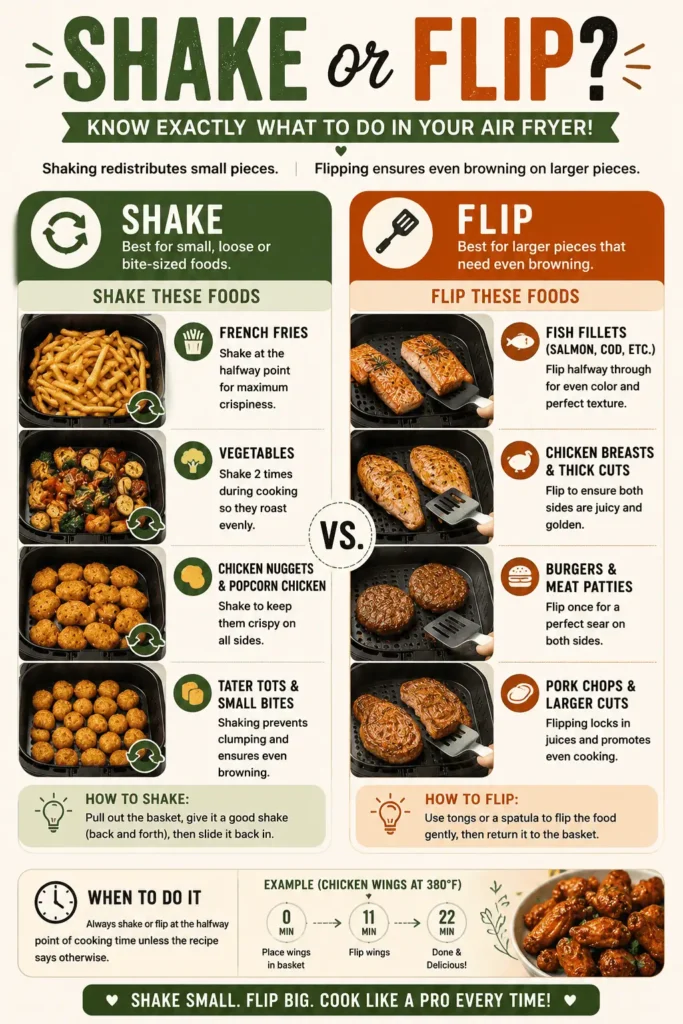
This is easier than you think. Small pieces get shaken, big pieces get flipped.
Fries, Brussels sprouts, cauliflower florets, diced potatoes — shake the basket. Pull it out, give it 3-4 good shakes, slide it back in. Do this halfway through cooking, or twice if you’re feeling ambitious.
Chicken breasts, salmon fillets, pork chops, burgers — flip them once at the halfway point. Use tongs or a spatula. It takes 10 seconds.
What Happens If You Forget?
Your food won’t be ruined. One side might be darker than the other, or some pieces crispier than others.
Set a timer on your phone for the halfway mark. After a week of cooking, it becomes automatic. You’ll hear the air fryer running and instinctively know it’s time to shake or flip.
Best Foods to Try First
Start with something nearly impossible to mess up. You want early wins to build confidence.
Frozen French fries are the perfect first recipe. Dump them in, set to 400°F (200°C) for 15 minutes, shake once. Done. They come out better than any restaurant.
Next, try chicken wings. Season them with salt, pepper, and garlic powder. Cook at 380°F (193°C) for 22 minutes, flip halfway. They’re crispy, juicy, and you’ll feel like a genius.
The Beginner Recipe Progression
Week one: frozen foods (fries, nuggets, tater tots). Week two: simple proteins (chicken breasts, salmon). Week three: vegetables (broccoli, Brussels sprouts, bell peppers). Week four: experiment with more adventurous air fryer recipes.
By week four, you’ll be air frying things you never imagined — hard boiled eggs, leftover pizza, even cakes. But don’t rush it. Master the basics first.
Common Mistakes to Avoid
These are the mistakes every beginner makes. Learn from them now instead of the hard way.
✗ Not Preheating
Most air fryers need 2-3 minutes to preheat. Skipping this means uneven cooking and longer times. Just turn it on empty while you prep your food — by the time you’re ready, it’s hot.
✗ Using Wet Batter
Liquid batter drips through the basket holes and makes a mess. Use dry coatings instead: breadcrumbs, panko, crushed cornflakes. Press them on firmly and they’ll stay put.
✗ Ignoring the Smoke
If your air fryer smokes, it’s usually because grease is dripping onto the heating element. Add a tablespoon of water to the bottom drawer (under the basket) before cooking fatty foods like bacon or sausage. Problem solved.
✗ Not Drying Food First
Moisture is the enemy of crispiness. Pat chicken, fish, and vegetables completely dry with paper towels before seasoning. This one trick makes everything come out 10 times crunchier.
✗ Forgetting to Clean the Basket
Leftover grease and food bits burn during the next cook, creating smoke and bad flavors. Wash the basket after every use — it takes 60 seconds under warm water with dish soap.
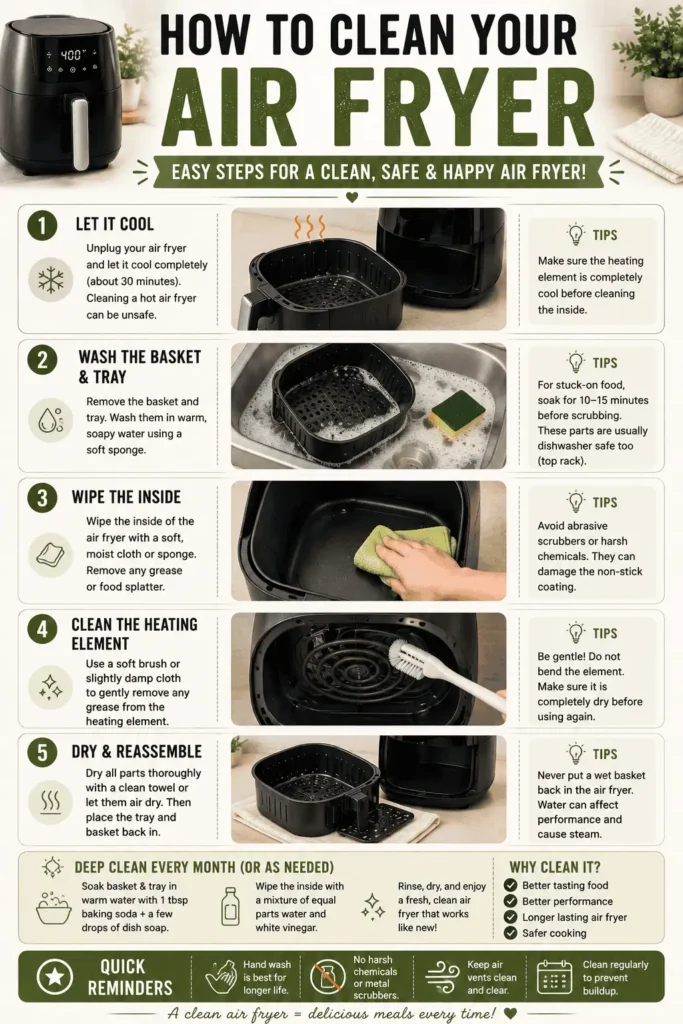
How to Clean Your Air Fryer
Cleaning is shockingly easy. Don’t let it intimidate you.
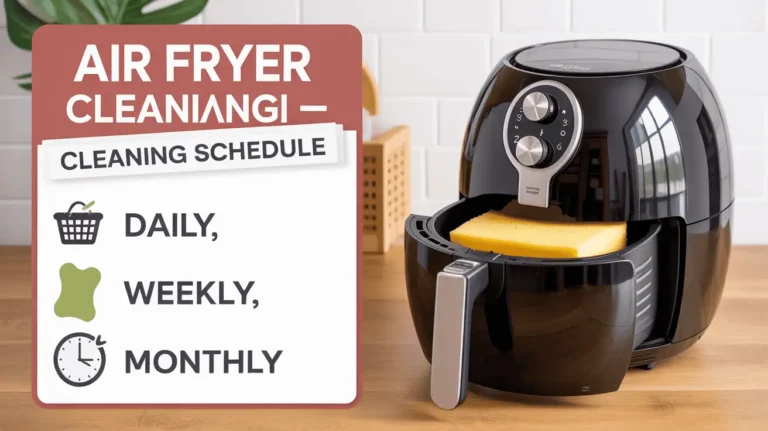
After every use, let the basket cool for 5 minutes. Pull it out, dump any crumbs, and wash it with warm soapy water and a soft sponge. Most baskets are dishwasher-safe, but hand-washing takes less time.
Wipe down the inside of the main unit with a damp cloth. Check the heating element — if there’s grease splatter, gently wipe it with a damp paper towel once it’s completely cool.
Deep Cleaning Once a Month
Fill the basket with hot water and a squirt of dish soap. Let it soak for 10 minutes. Scrub with a non-abrasive sponge.
For stubborn stuck-on bits, make a paste of baking soda and water. Rub it on, let it sit 5 minutes, then scrub. Everything comes off without scratching the non-stick coating.
Frequently Asked Questions
Can I put aluminum foil in an air fryer?
Yes, but only in the basket — never covering the bottom heating element. Use small pieces that don’t block airflow. Parchment paper designed for air fryers works even better and doesn’t risk blowing around.
Do I need to flip food every time?
For large pieces like chicken breasts or salmon, yes — flip once halfway through. For small items like fries or vegetables, shaking the basket works better. Foods that are already breaded or coated benefit most from flipping.
Why is my food not crispy?
Three main reasons: you overcrowded the basket, didn’t use enough oil, or didn’t dry the food before cooking. Fix any of those and you’ll see a dramatic improvement. Also make sure you’re shaking or flipping at the right time.
Can I cook frozen food without thawing?
Absolutely — that’s one of the best features of an air fryer. Frozen fries, chicken nuggets, fish sticks, even frozen vegetables go straight from freezer to basket. Just add 2-3 minutes to the cooking time.
What’s the white smoke coming from my air fryer?
That’s steam, not smoke, and it’s completely normal when cooking foods with high water content like vegetables or marinated meat. If it’s gray or smells burnt, that’s grease hitting the heating element — add water to the bottom drawer to prevent it.
How do I know when food is done?
Use a meat thermometer for proteins — chicken should hit 165°F (74°C), pork 145°F (63°C). For everything else, look for golden-brown color and listen for sizzling. It’s okay to open the basket and check — it doesn’t affect cooking like opening an oven does.
Can I reheat leftovers in an air fryer?
Yes, and it’s better than a microwave. Reheat at 350°F (175°C) for 3-5 minutes. Pizza, fried chicken, and french fries come back to life. Even pasta bakes and casseroles reheat beautifully without getting soggy.